Tennis Match Simulator
Enter each player's serve point-win probability to calculate exact match odds, set and game probabilities, and the most likely scorelines.
Match result
Enter serve rates to begin.
Match result
- Set win probability
- —
- Game win probability
- —
- Most likely scorelines
- —
—
· Free
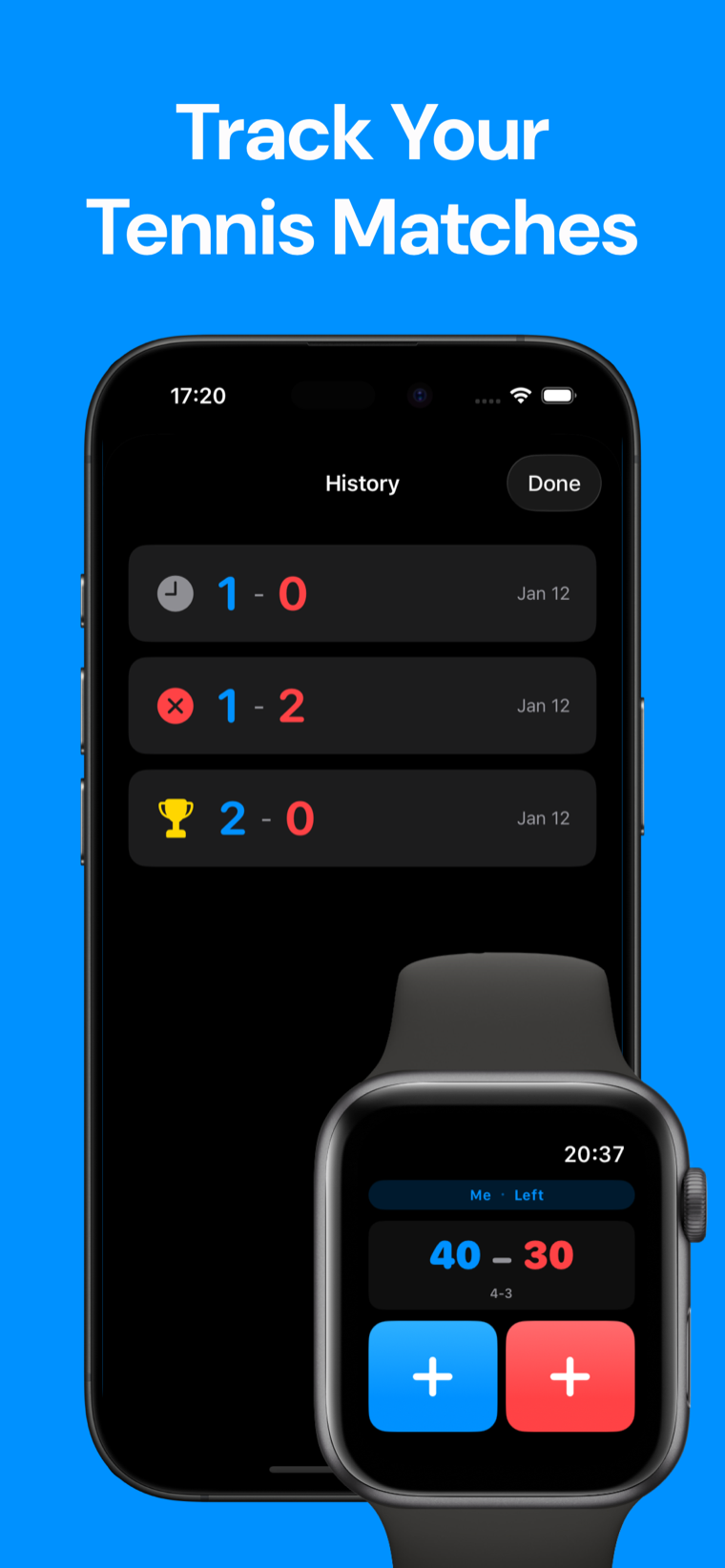
Track it in Tennis Scoreboard.
Track match notes, tennis sessions and training goals privately on your device.

How this tennis simulator works
This tennis simulator uses dynamic programming over every point state: games require four points and a two-point lead, sets require six games and a two-game lead, and 6–6 is resolved by a tiebreak. Serve alternates each game, so the model tracks who serves.
Small edges compound enormously in tennis. A 55% point-win rate on serve turns into a larger match-win probability because each point shapes games, games shape sets, and sets shape the match. This calculator computes and shows that amplification rather than simply asserting it.
P(deuce hold) = p² ÷ (1 − 2p(1 − p)) Results are exact probabilities for the stated model, not random simulations. The linked tennis match time calculator estimates duration separately.
Tennis simulator FAQ
What should I enter for serve probability?
Enter the percentage of points each player wins when serving, such as 55 for 55%. The simulator converts it to a probability from 0 to 1.
Does this use random simulation?
No. It uses memoised dynamic programming over point, game, set and match states, so the result is deterministic and exact for this model.
Why does a small serve edge matter so much?
A point edge compounds through deuce games, service breaks, sets and match format. The result panel shows the calculated 55% example for the selected format.
What does the final-set tiebreak option change?
When enabled, a deciding set at 6–6 is resolved by a first-to-10 tiebreak with a two-point lead. Otherwise, the set uses the standard first-to-7 tiebreak modeled here.
Can I estimate how long the match will take?
Use the sibling Tennis Match Time Calculator for a duration estimate.